(Ovis vignei arkal)
Physical Description:
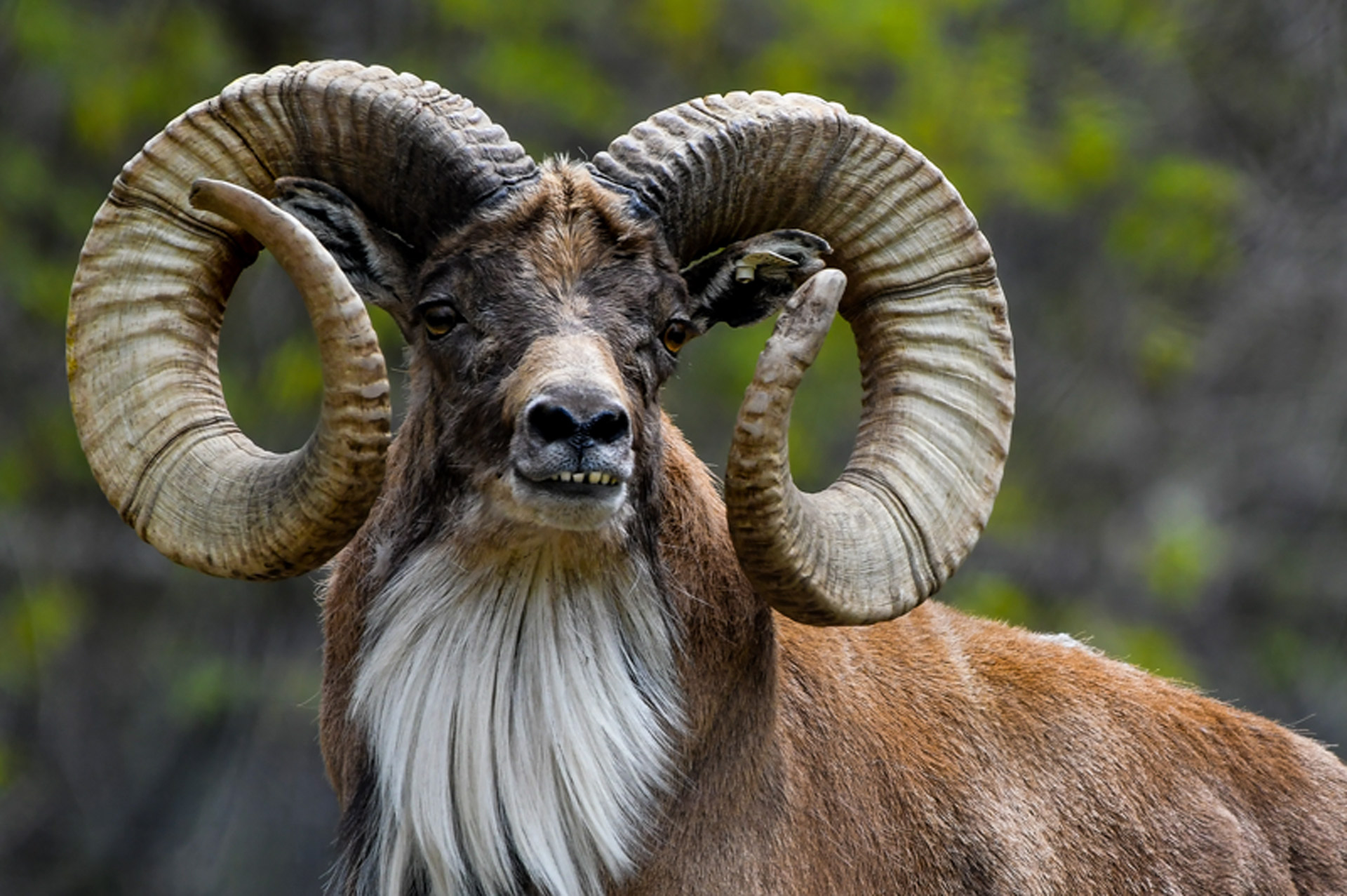
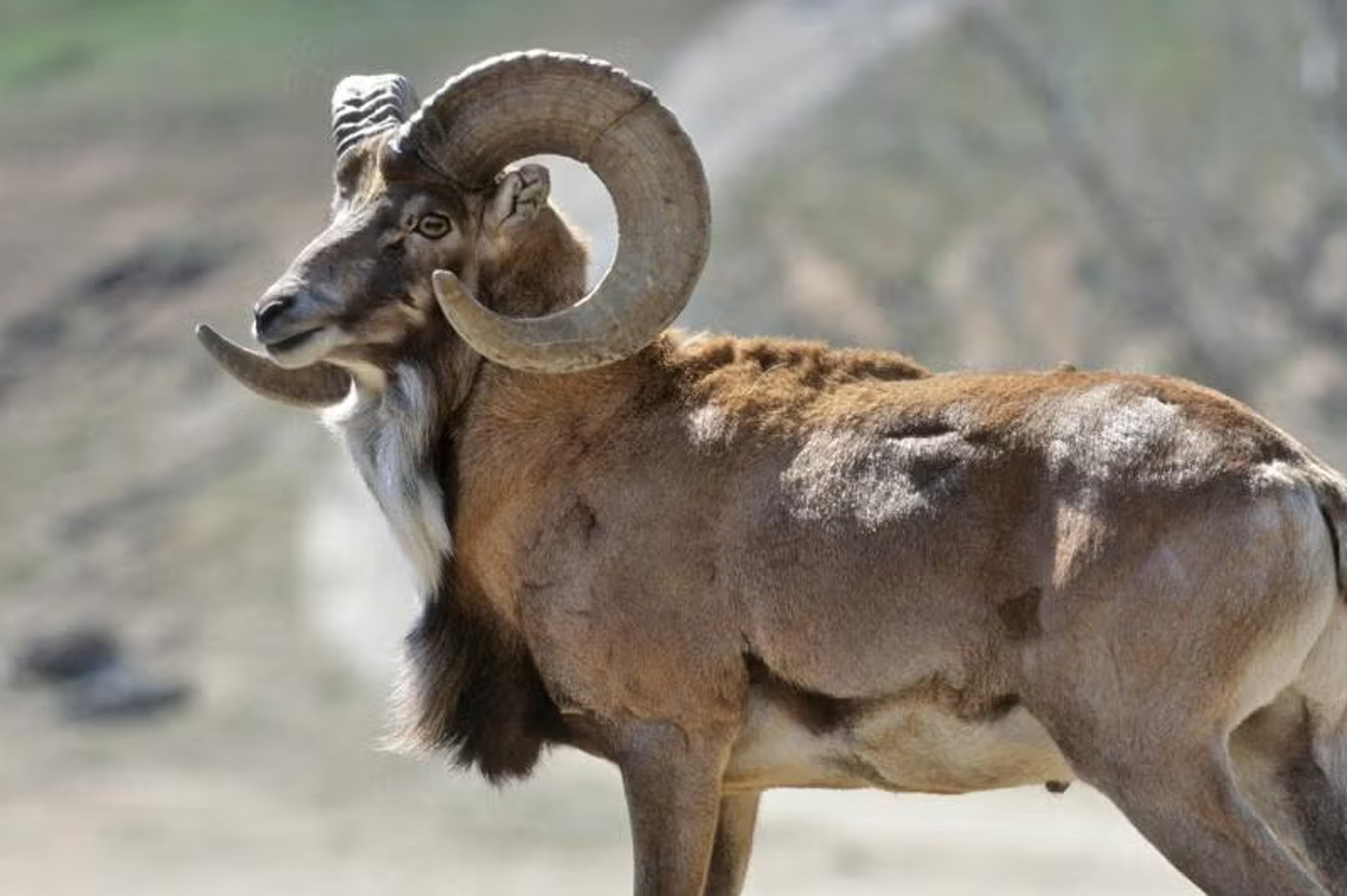
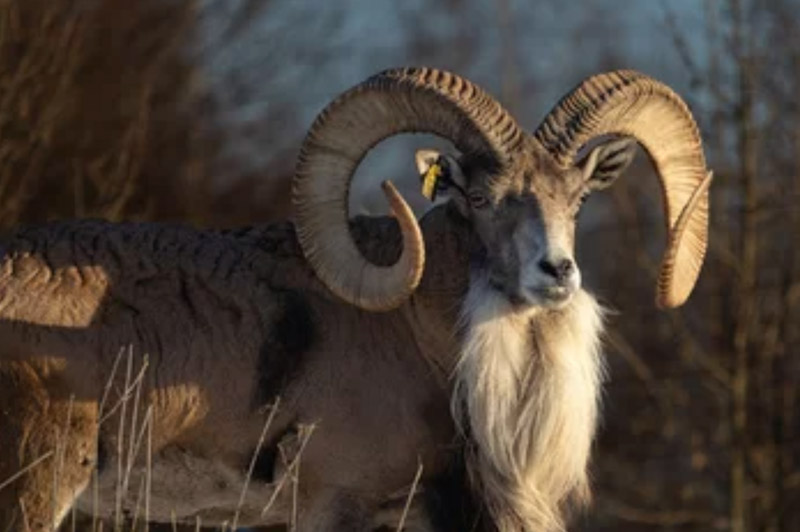
The Transcaspian urial is a medium-sized wild sheep with a lean, agile build adapted to rugged terrain. Its coat is typically light brown to sandy in color, often fading to a lighter underside. Males are distinguished by their large, spiral-curving horns and a darker neck ruff, especially during the winter months. Females are smaller and usually have shorter, more slender horns.
Reproduction:
Breeding season generally occurs in late autumn to early winter (November to December). After a gestation period of about 5 months, females give birth in the spring, usually to a single lamb, though twins can occasionally occur. Lambs are able to stand and follow their mothers shortly after birth.
Native Range Land:
The Transcaspian urial is native to arid and semi-arid regions of Central Asia, particularly in areas surrounding the Caspian Sea. Its range includes parts of Turkmenistan, Iran, Uzbekistan, and Kazakhstan, where it inhabits open hills, rocky slopes, and desert mountain environments.